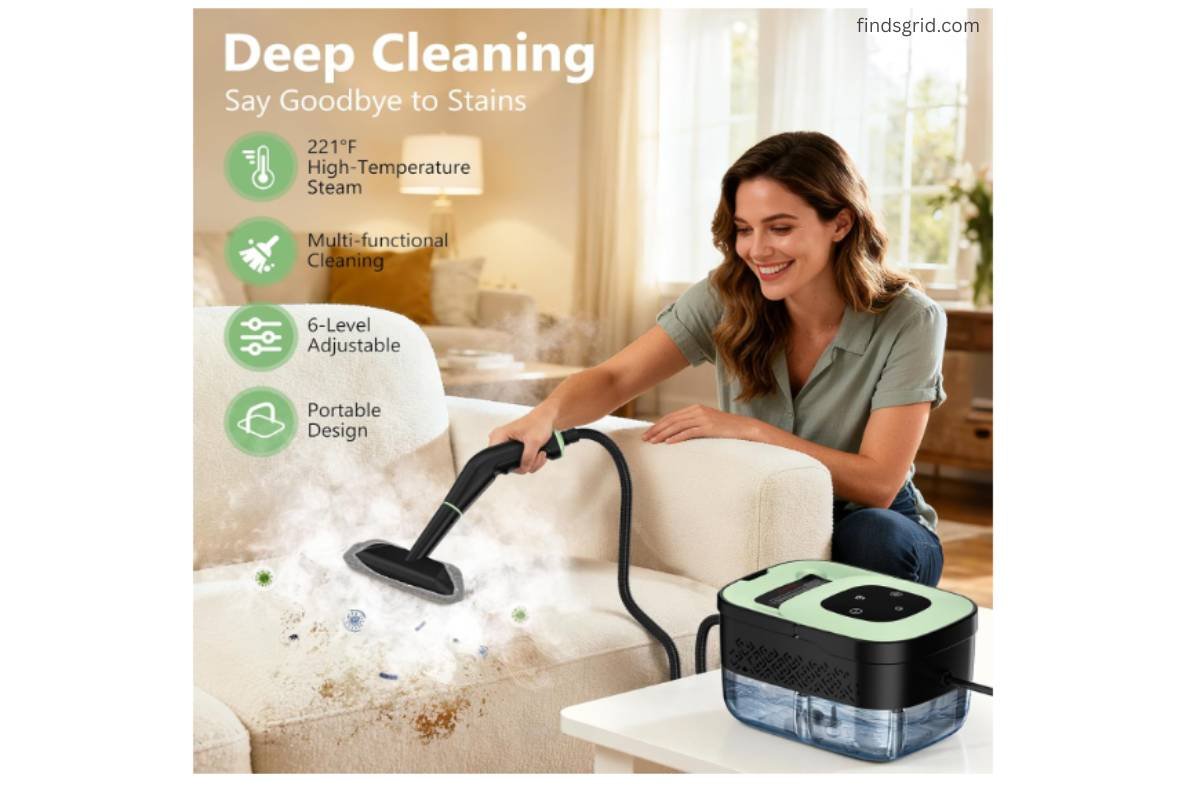
If you want to learn how to steam clean grout fast and stop endless scrubbing, here’s a scene you probably know too well. You mop the kitchen floor on a Sunday. Looks amazing. By Tuesday, those grout lines are already turning gray again, like they’ve got some kind of memory of their own. If you’ve ever been on your hands and knees with an old toothbrush, muttering under your breath at a bathroom floor, you already know the tile isn’t the problem. The grout is. Below I’ll get into why that happens, walk through a steam cleaning method that actually works, and cover a few mistakes that quietly make grout worse over time.
Quick Answer
Grout stays dirty because it’s porous basically sand and cement, so it soaks up dirty mop water, oils, and moisture instead of letting them sit on the surface. That trapped grime feeds mold and bacteria deep in the lines. Pressurized steam from a fast-heating handheld unit, aimed straight into the lines is a good way to steam clean grout with little scrubbing and no chemicals.
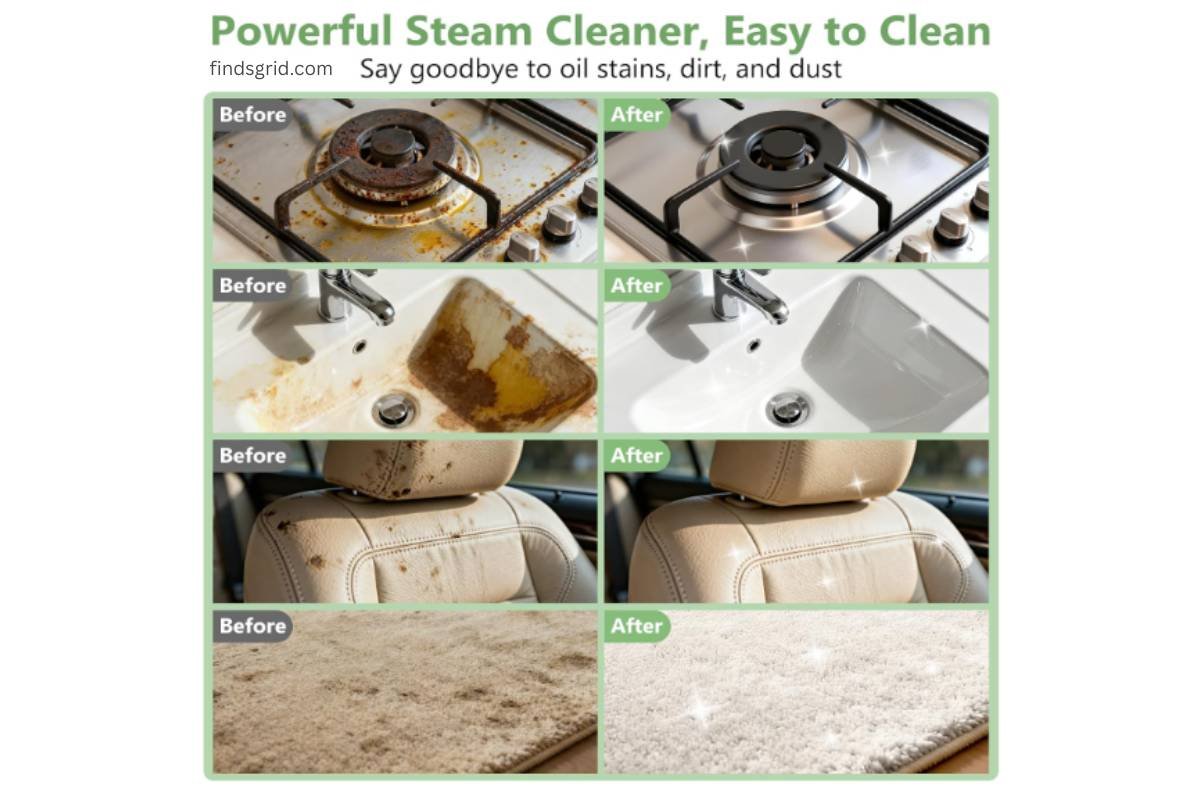
Why Is Tile Grout Always Dirty?
Tile and grout aren’t the same material, and that’s really the whole story. Tile has a glazed surface, so dirt mostly sits on top of it and wipes off. Grout doesn’t have that luxury. It’s cement and sand, full of tiny pores, and pores mean things get in and stay in.
Think about what actually happens when you mop. You’re not cleaning the floor so much as pushing dirty water into every seam between the tiles. The grout just soaks it up. Same story with grease from cooking, or soap scum in a shower stall it doesn’t stay put on the surface, it works its way down.
Now throw humidity into it. Kitchens and bathrooms both stay damp a good chunk of the time, and grout holds onto that dampness longer than the tile does. Porous plus damp plus trapped organic gunk that’s basically an invitation for mold and mildew to move in. This is why grout goes white to gray to almost black over a few months, even if you’re mopping every week. You’re wiping the surface. The actual problem is sitting underneath, untouched.
How to Steam Clean Grout Step-by-Step
Steam gets into the same pores that trap all that grime and, instead of pushing more dirt in, it pulls it back out. Here’s how to do it without wasting your morning.
1. Clear the floor first. Sweep or vacuum before you steam. Otherwise you’re just steaming crumbs and hair into your grout lines, which defeats the point.
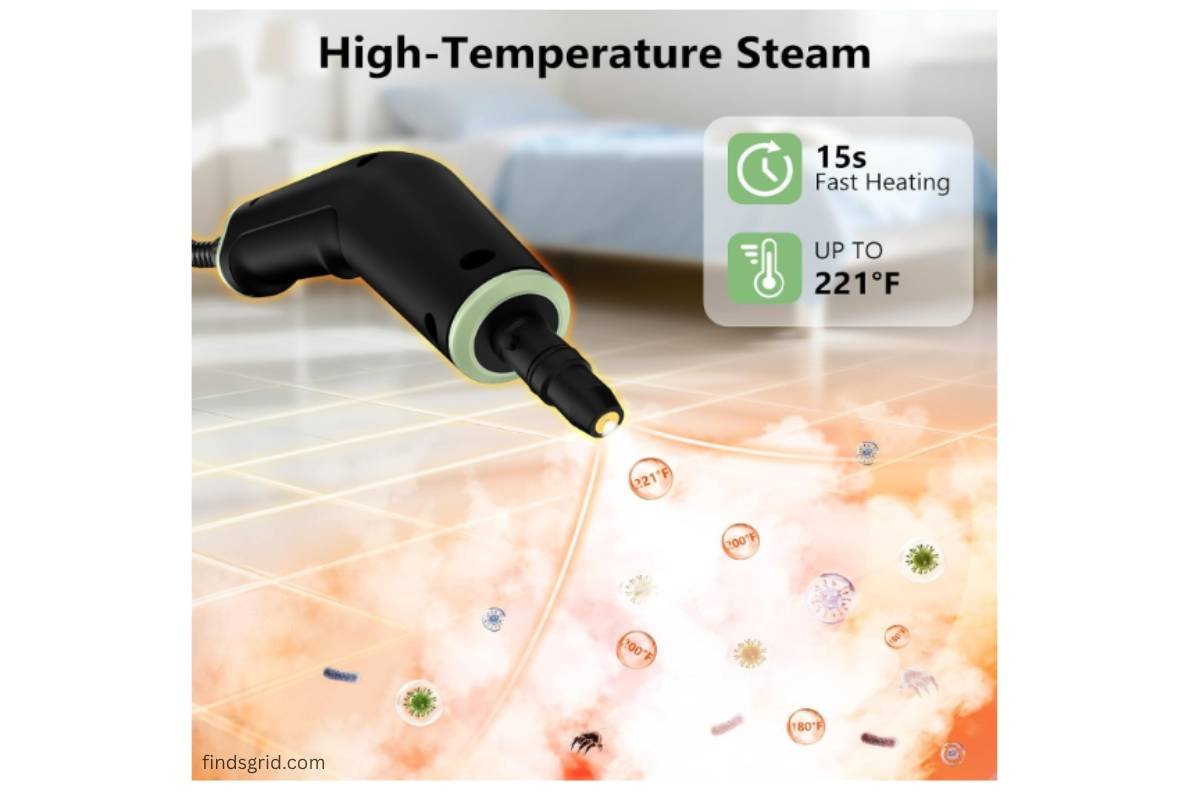
2. Heat the unit. Fill the tank, plug it in, give it a minute. Some handheld steamers claim to heat up in around 15 seconds, which means less standing around waiting.
3. Work along the lines, not across them. This is where most people get it wrong. Don’t wave the nozzle over the floor the way you’d mop. Hold it a couple inches from the grout seam and move slowly, letting the steam actually sit in the joint for a second before you move on.
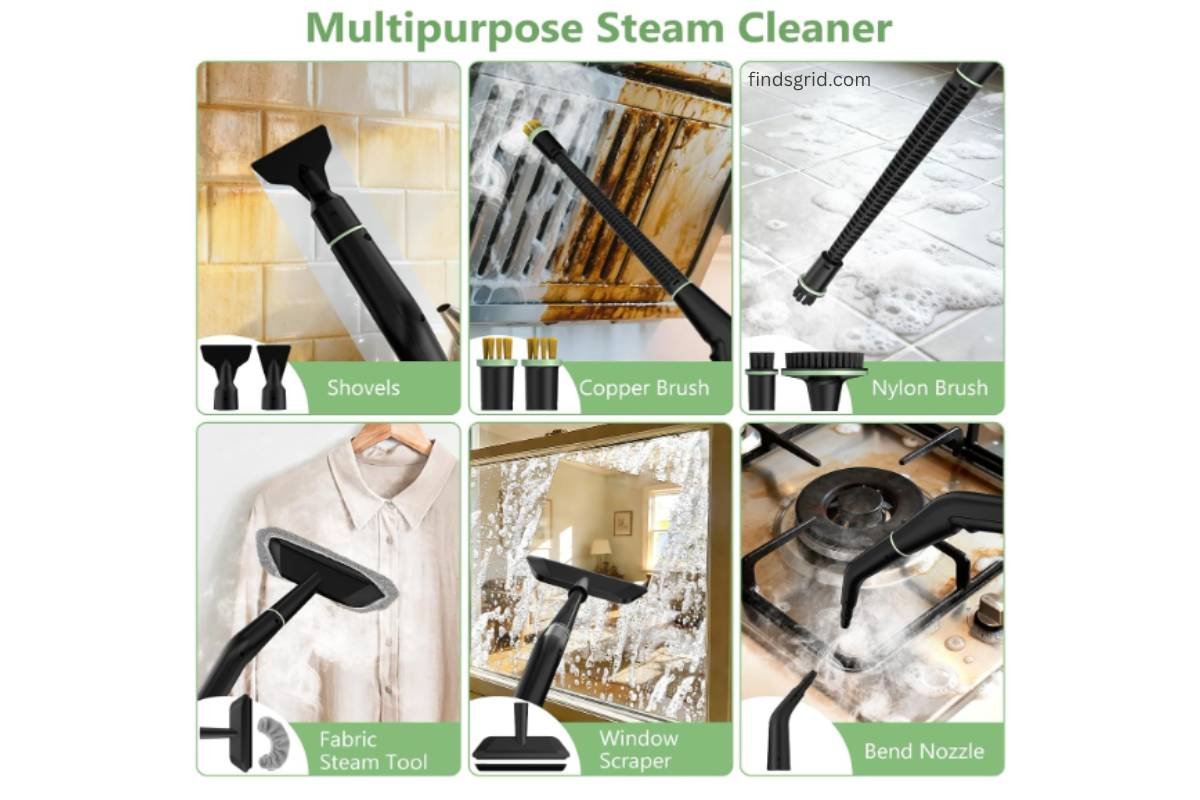
4. Bring in the brush for stubborn spots. Grout that’s gone dark or crusty needs a small angled brush attachment. Let the steam loosen it up first, then a light back-and-forth with the brush finishes it off. You shouldn’t need to press hard, if you’re scrubbing like you’re stripping paint, the steam hasn’t done its job yet.
5. Wipe it down right away. Grab a microfiber cloth and go over the area immediately after steaming. This catches the loosened grime before the water evaporates and it settles right back where it started.
6. Reseal if it’s overdue. Heat and moisture can wear down grout sealer over time, so if your grout hasn’t been sealed in a year or more, it’s a good time to reseal once it’s fully dry. Sealed grout resists new stains better.
Why Pressurized Steam Beats Chemical Cleaners
Chemical grout cleaners aren’t useless. They work. But most rely on bleach or acid, and that comes with baggage fumes in a small bathroom, gloves you have to remember to grab, residue that can wear down unsealed grout over time.
Steam skips all of that. It’s water turned into pressurized vapor, usually around 220°F, hot enough to break down grease without a drop of chemical anywhere near it. And that heat does something bleach can’t really do it gets into the grout instead of just bleaching whatever’s on top. Sustained high heat can reduce mold and mildew on the surface, so a solid steam pass can knock the mildew back instead of just masking it with a lighter shade. Heavy mold deep in porous grout can come back, so wear a mask and ventilate the room.
There’s a practical side too. No rinsing, no chemical smell hanging around the bathroom for hours, no risk of accidentally mixing two cleaners you shouldn’t (it’s easy to grab the wrong bottle, and mixing bleach with ammonia-based cleaners is dangerous) For homes with kids or pets, or anyone who’s sensitive to fumes, steam is just an easier, safer way to land the same result. Usually a better one.
The Right Tool Makes This Way Easier
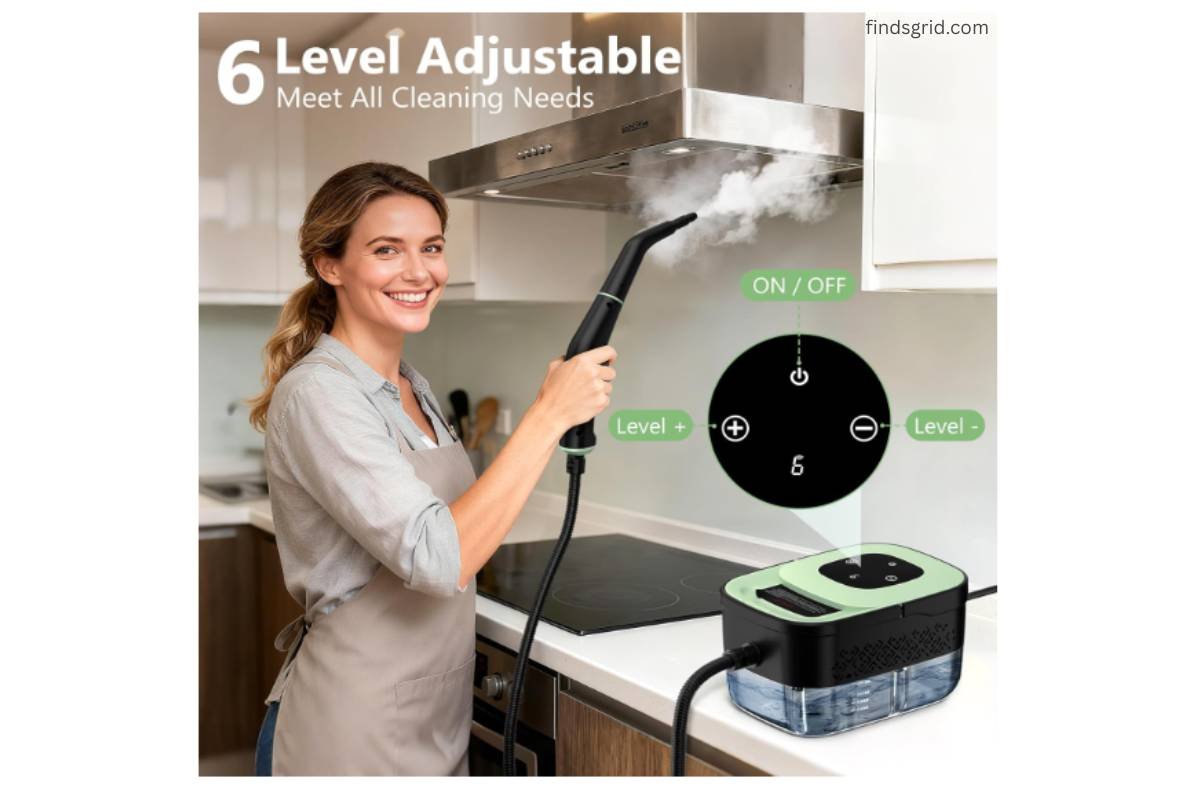
None of this matters much if your steam cleaner takes forever to heat up or dies halfway through a bathroom floor. If you want something lightweight that heats up in just 15 seconds and can tackle stubborn lines without a bunch of setup, check out our full WSRYYCC Portable Steam Cleaner Review it covers the specs, tank size, and included nozzles.
3 Common Grout Cleaning Mistakes to Avoid
Scrubbing with a wire brush. Feels satisfying in the moment, but wire bristles scratch grout and can chip tile edges. A nylon brush or soft-bristle attachment does the same job without the damage.
Using acid-based cleaners on unsealed grout. Vinegar, lemon juice, most store-bought acidic cleaners they’ll eat away at unsealed grout with repeated use, wearing it down and making it even more porous. Which is the opposite of what you want.
Skipping the final wipe-down. Steam loosens the grime, sure, but if you don’t wipe it away right after, some of it just resettles into the grout as the water evaporates. That last microfiber pass isn’t optional. It’s the step that actually gets the dirt out of the house.
Mopping vs. Chemical Cleaners vs. Fast-Heat Steam Cleaning
| Method | Effort Level | Chemical Exposure | Deep Grime Removal | Surface Safety |
|---|---|---|---|---|
| Mopping | Low, but constant | Low to moderate | Poor, dirty water goes right back into the pores | Safe, but spreads grime around |
| Chemical Cleaners | Moderate, usually needs scrubbing | High fumes, gloves | Moderate, mostly surface-level | Risky on unsealed or colored grout |
| Fast-Heat Steam Cleaning | Low, steam does the work | None | Strong heat gets into the pores | Generally safe on sealed tile and grout; test first |
Frequently Asked Questions
Not if you’re doing it right. Steam cleaning uses short bursts of vapor, not a constant soak, so it won’t strip a properly applied sealer. Just don’t hold the nozzle on one spot too long, and give freshly sealed grout a few days to cure before you steam it.
High-traffic spots like kitchens and entryways do well with a pass every two to four weeks. Bathrooms, especially showers, need it more every one to two weeks since humidity speeds up how fast mold takes hold.
It kills a good chunk of surface mold and mildew on contact most species can’t handle sustained heat above roughly 160°F. It won’t necessarily reach mold that’s dug deep into cracked or damaged grout, though. That kind usually needs the grout repaired or replaced, not just cleaned.
Technically, yes. But a nozzle or small brush attachment changes things quite a bit. It focuses the steam right into the grout line instead of spreading it across the whole tile, and that focus is where most of the actual cleaning power comes from.
Final Thoughts
Grout gets dirty because of what it’s made of. Not because of anything you’re doing wrong with your mop. Switch to steam, aim it directly into the lines with the right attachment, and that tired gray look starts fading without scrubbing or chemical smell involved. Go take a look at your grout right now and if your current routine isn’t cutting it anymore, our full steam cleaner review has the specs and attachments that make this whole thing possible.
Safety note: Steam can cause burns, so keep it away from skin and never point it at people or pets. Test a small hidden spot first, and avoid steaming natural stone like marble or travertine, loose or cracked tiles, and nearby laminate, vinyl, or unfinished wood, because heat and moisture can damage them. Follow your steam cleaner’s manual.