If reading in bed giving you headaches is ruining your late-night book sessions, you are not alone. Finding the right light setup can go a long way toward reducing night eye strain.
Quick Answer
Stick to warm amber light, roughly 1800K-3000K, and keep the brightness as low as it can go while you still read comfortably. Cooler white light, anything past 5000K, can keep you more alert and may make it harder to fall asleep once the book closes.
Why Bad Lighting Strains Your Eyes at Night
It’s 11 PM. Your partner’s out cold next to you. You flip on the bedside lamp for just one more chapter and… immediately regret it. Too bright. Too blue. Now you’re squinting and trying not to wake anyone up at the same time, which never quite works.
Here’s the actual problem. Most household bulbs and lamps put out cool white or daylight-style light somewhere around 5000K to 6500K. That’s basically midday sun in a bulb. Great at noon, pretty rough at midnight, because it’s telling your brain to stay alert exactly when you’re trying to wind down. Add in glare bouncing off a glossy page or a phone screen, and your eyes are working overtime just to hold focus.
There’s a melatonin piece too, and it matters more than people realize. Research suggests blue-heavy light suppresses melatonin more than warm light does, which can make falling asleep take longer. Over a week or two, glare, dim focus, and long reading sessions can add up to tired or dry eyes and a dull headache.
Step-by-Step: How to Choose & Set Up the Ideal Reading Light
Start with color temperature. Look for 1800K to 3000K on the box usually labeled “warm” or “amber.” Anything sold as “daylight” or “cool white” belongs on your desk during work hours, not your nightstand.
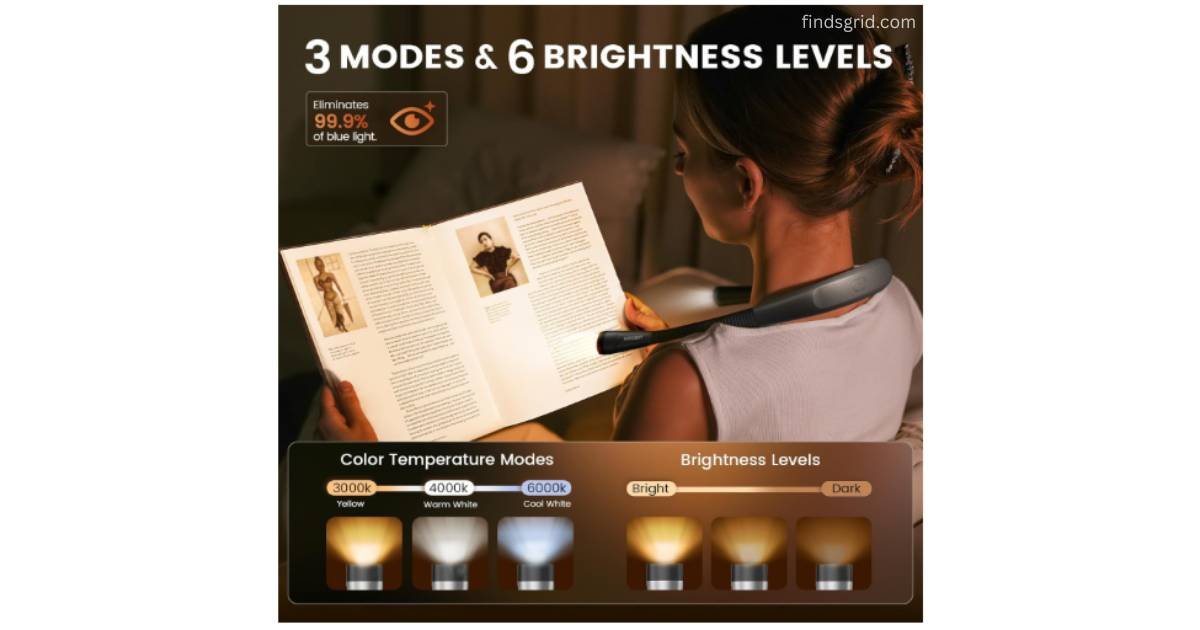
Get the brightness right. People mess this up constantly. More light isn’t better reading it’s just more strain you didn’t need. Use the dimmest setting where the words are still clear. If you’re comfortable, you nailed it. If you keep bumping the brightness up every few minutes, something’s off.
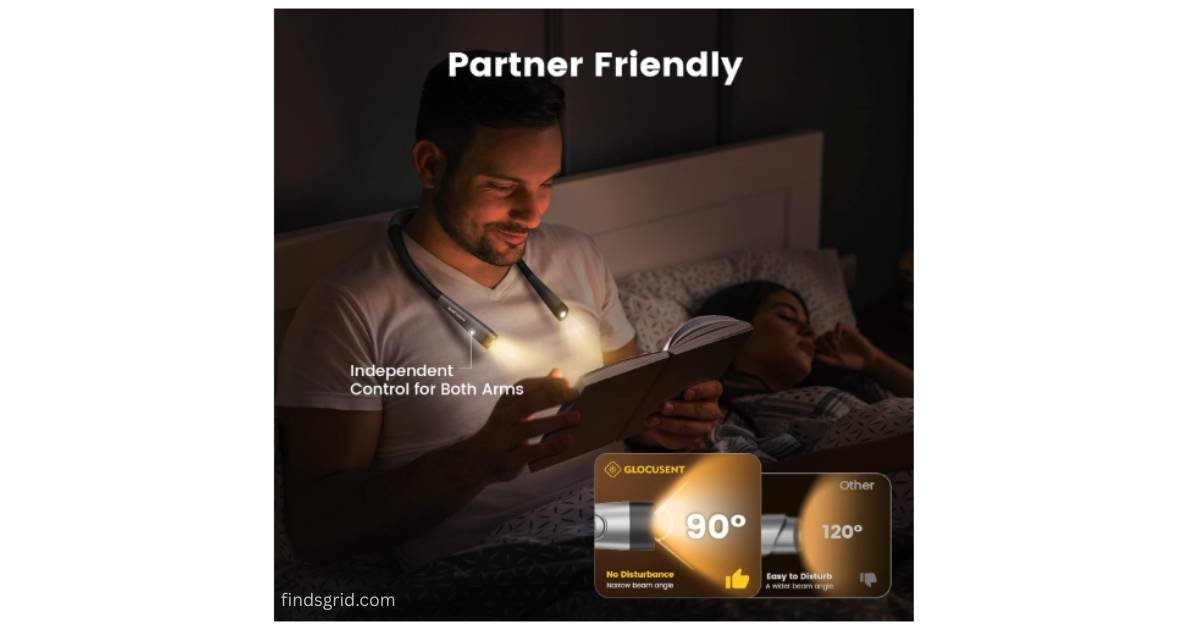
Position the beam. A narrow beam, ideally around 90 degrees, keeps light on the page instead of spraying across the whole room. This one gets overlooked constantly. A wide, unfocused beam lights up your ceiling and walls too and now the whole room’s brighter, including the side your partner’s sleeping on.
Match it to the room. Already got a dim nightlight going, or blackout curtains up? Your reading light should sit lower on the brightness scale than it would in a fully lit room. Same brightness, totally different feel depending on what’s already lit around you.
The Ultimate Tool for Hands-Free Night Reading

Of the lighting options for reading in bed, neck reading lights are worth a look because they cover most of the points above in one device: no juggling, and no repositioning a lamp.
The Glocusent Neck Reading Light is one example of this category. Three color modes 3000K yellow, 4000K warm white, 6000K cool white so you’re not stuck with one tone regardless of what you’re actually doing. Novel before bed? 3000K yellow, done. Need more light for a craft project or reading a recipe off a card? Bump it up. Each side runs its own independent switch too, which sounds minor until you realize it means you can dim one side lower than the other, or just kill one side entirely if you’re reading solo and don’t need both beams going.
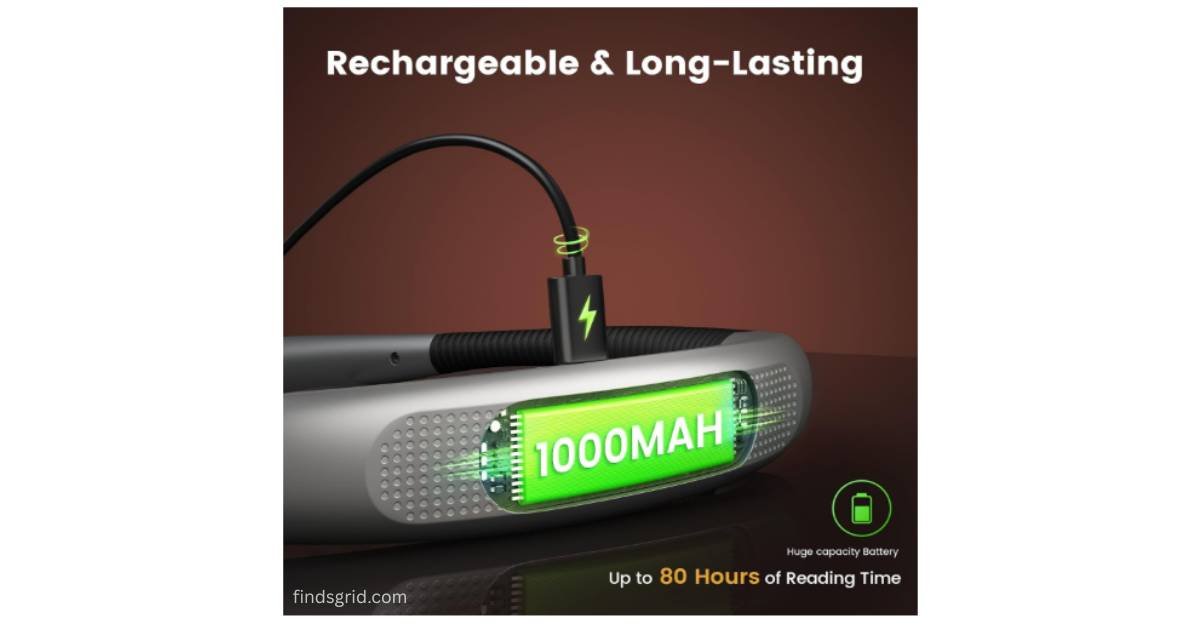
Battery life ends up mattering more than you’d expect going in. According to the listing, it has a 1000mAh battery with USB-C charging and roughly 80 hours of runtime on a single charge at general reading brightness (runtime varies with brightness). That’s weeks of nightly reading before it needs a charge again no digging around for AA batteries at 11 PM, no cord tangled across the nightstand.
The flexible neck is what makes the hands-free idea work. No flashlight in one hand and book in the other. No repositioning a clip-on every time you shift position under the covers. It just sits there and moves with you. For the specs and features, see our Glocusent Neck Reading Light Review.
Common Night Reading Mistakes to Avoid
Using amber light during the day. Great for winding down at night, but a brighter, cooler light is usually better when you need to stay alert during the day.
Holding the book too close to your face. An old habit most people never quite shake. Forces your eyes to work harder to focus, and it’s a fast track to a tension headache no matter how good the lighting is otherwise. Aim for something like 14 to 16 inches away if you can manage it.
Overcharging the battery. It’s tempting to leave rechargeable lights plugged in overnight. Follow the manufacturer’s charging instructions, and don’t leave a charging device unattended or under bedding.
Bedside Lamp vs. Clip-On Light vs. Neck Reading Light
| Feature | Bedside Lamp | Clip-On Light | Neck Reading Light |
|---|---|---|---|
| Hands-free use | No | Partial (needs clipping/adjusting) | Yes |
| Disturbs sleeping partner | Often | Sometimes | Rarely (narrow beam) |
| Portability | Low | Moderate | High |
| Color temperature options | Usually fixed | Rarely adjustable | Multiple modes common |
| Battery/cord dependency | Cord-dependent | Battery or cord | Rechargeable, cord-free |
| Beam control | Wide, room-filling | Narrow but fixed position | Narrow, adjustable angle |
FAQ
Closer than most people think. Amber sits at the very warm end, around 1800K-2200K, while standard “yellow” warm light runs closer to 3000K. Both beat white or blue-toned light by a mile for nighttime use amber’s just a touch gentler if you’re especially light-sensitive.
No. That’s more old wives’ tale than actual medicine. You might get temporary strain, fatigue, or a headache from your eyes working harder than usual, but it’s not doing lasting damage to your vision.
Somewhere around 40 to 60 lumens is usually plenty for close-up reading, especially with a focused beam. Enough to read clearly without flooding the room past that point you’re mostly just adding glare, not usefulness.
Yes, and it’s well-documented by now. Blue and cool-white light suppresses melatonin more aggressively than warm light does, which is a big part of why a warm-toned light before bed tends to help people drift off faster than reading under a regular lamp does.
Conclusion
Good night reading comes down to two things, really: warm, low-intensity light, and a setup that doesn’t make you choose between your own comfort and not disturbing whoever’s asleep next to you. Get the color temperature and brightness right, and the headaches mostly sort themselves out. Want a closer look at one hands-free option? See our full Glocusent Neck Reading Light Review for the specs and features.
Note: This article is general information, not medical advice. If your headaches are severe, frequent, or come with vision changes, see an eye doctor or physician.
Source: For general information on digital eye strain, see the American Academy of Ophthalmology.