
This post contains affiliate links. We may earn a commission if you purchase through them, at no extra cost to you.
A dorm room bedside charging station was the last thing on my mind until I moved into a shared room with exactly one working outlet within reach of my bed. One. It was hidden behind the headboard, half-blocked by the frame, and every night I’d end up reaching blindly into a gap between the mattress and the wall just to grab my phone off the charger. My laptop cord, my lamp, my fan they all fought over that same plug, and the extension cord I bought to fix it just added a new problem: a tangled mess snaking across the floor that I stepped on more times than I want to admit.
Sound familiar? If you’ve landed in a dorm room or a small rental where the previous tenant clearly never needed to charge more than one device at a time, you already know the drill. No outlets where you need them. No floor space for a real nightstand. And a lease that says, in no uncertain terms, don’t put holes in these walls. What I eventually built to fix it is basically a proper dorm room bedside charging station and it took about twenty minutes, start to finish.
So what’s the actual fix?

Short version: a floating shelf that mounts without drilling, paired with a wall outlet extender that turns your one plug into several. Put them near your bed, and you’ve basically rebuilt a nightstand out of thin air, minus the floor footprint, minus the cord clutter, minus any damage to the wall when you move out.
It sounds almost too simple, but that’s kind of the point. Most bedside clutter isn’t a “not enough stuff” problem, it’s a “everything’s competing for the same six inches of space” problem. Once you have a working dorm room bedside charging station in place, that problem basically disappears.
Why power strips on the floor never actually solve anything
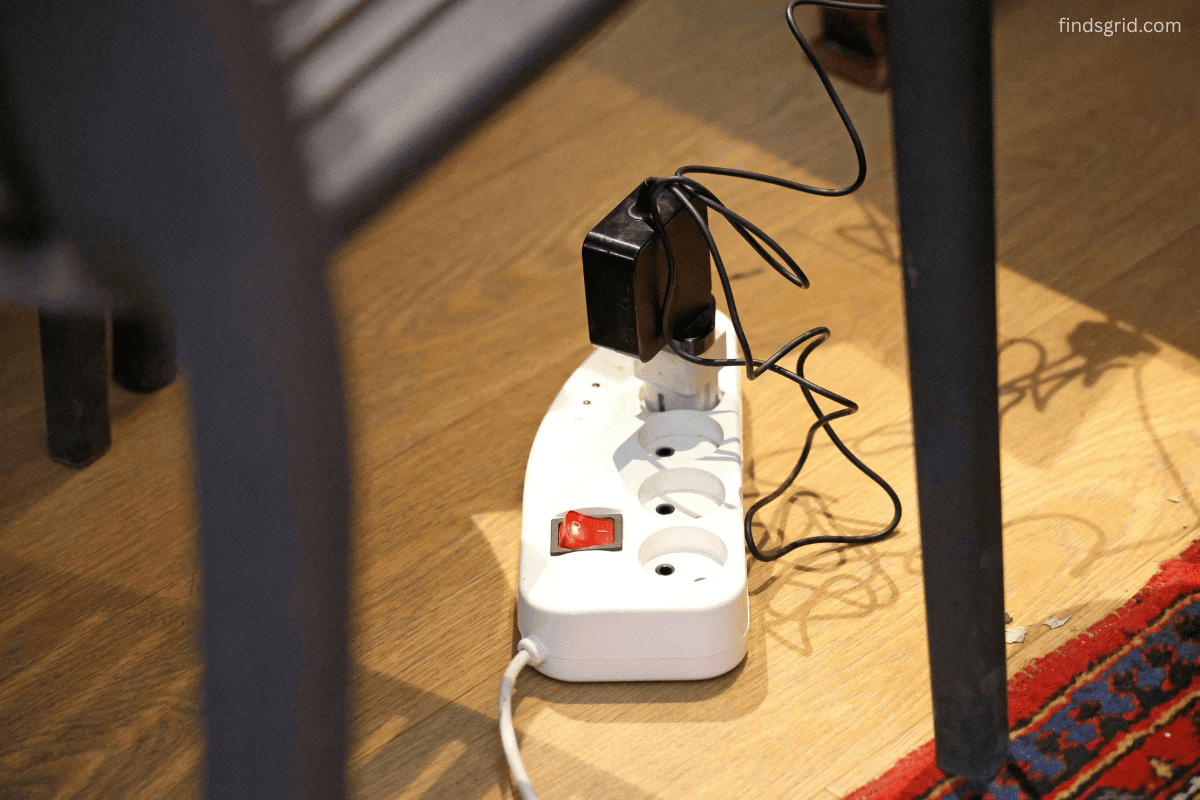
Let’s talk about why the obvious fix, just buy a power strip, doesn’t really work long-term.
A power strip sitting on your floor does technically give you more outlets. But now you’ve got a cord running from the wall, across your floor, up onto your bed or desk. It’s a trip hazard in the dark, it collects dust, and honestly it just looks messy no matter how you arrange it. I’ve kicked mine more times than I can count getting out of bed half-asleep.
And the nightstand issue is a separate headache entirely. A twin XL bed pushed against a wall in a 10×12 room doesn’t leave much room for furniture whose entire job is holding a phone and a lamp. So people improvise, phone goes on a stack of textbooks, water bottle balances on the windowsill, glasses end up on the floor where they get stepped on. None of it’s ideal.
Going vertical is the part nobody thinks of first
Once you stop trying to solve this on the floor and start thinking about your wall instead, the whole problem gets a lot smaller.
A floating shelf mounted right beside your pillow does the exact same job a nightstand would, somewhere for your phone, your glasses, your water bottle before you sleep but it takes up zero floor space. The ones worth buying use adhesive or a no-drill mounting system rather than screws, which matters a lot if your deposit is on the line. Some come with a built-in level too, which honestly saves you from that annoying moment of stepping back, realizing it’s crooked, and starting over.
Weight-wise, these shelves are built for everyday nightstand stuff, phone, glasses, a tumbler, maybe a small lamp, not a stack of hardcover books. Keep that in mind before you load it up.
If you want a lightweight, drill-free wall ledge designed specifically to hold nighttime essentials, check out our full WallShelfie Review for a detailed breakdown.
Now deal with the actual outlet shortage
The shelf handles surface space. The next piece is the outlet problem, and this is where a wall-mounted outlet extender comes in, not a flat power strip lying on the ground, but something that plugs directly into your existing socket and multiplies it vertically, right there on the wall.
The good ones now come loaded with useful stuff: surge protection so your laptop isn’t at the mercy of a random power spike, USB-C fast charging ports so you’re not digging around for an adapter brick, and sometimes even a soft built-in nightlight for those 3 a.m. water runs when you don’t want to flip on the overhead light. A few even have a small shelf built directly on top of the unit, so the space above your outlet which would otherwise just be dead wall becomes usable too.
For rooms with limited wall plugs, adding a multi-port extender like the Mifaso 9-in-1 Wall Outlet Extender with Shelf Review lets you charge laptops, phones, and lamps all from one organized wall hub.
Before you stick anything to a wall, a few things worth knowing
A handful of small mistakes ruin most adhesive mounting jobs, so here’s what actually matters. Wipe the wall down with rubbing alcohol first and let it fully dry, paint residue or dust weakens the bond more than people expect. Textured walls or cinderblock (common in older dorm buildings) don’t always play nice with adhesive strips, so check compatibility before buying anything. Don’t overload a single outlet just because the extender gives you more plugs; it multiplies convenience, not electrical capacity. Route your cords up along the wall with small adhesive clips instead of letting them trail across the floor, and give the adhesive time to cure, most brands say wait at least an hour before hanging anything, even if it feels stuck right away.
How the options actually stack up
| Feature | Standard Power Strip | Floor Nightstand | Wall Shelf & Outlet Extender Combo | Winner |
|---|---|---|---|---|
| Takes up floor space | No, but cords trail everywhere | Yes, a lot | No | Wall Shelf & Extender |
| Safe for dorms/rentals (no drilling) | Yes | Yes, if unattached | Yes | Tie |
| Cuts down on cord clutter | Not really | Not really | Yes | Wall Shelf & Extender |
| Gives you a surface for phone/glasses/water | No | Yes | Yes | Tie |
| Trip hazard in the dark | Yes | No | No | Wall Shelf & Extender |
| Adds charging capacity | Yes | No | Yes | Tie |
| Works in tight floor plans | Sort of | No | Yes | Wall Shelf & Extender |
A few questions people always ask
Not really a good idea. Most extenders are built for everyday electronics, phones, laptops, lamps, small speakers not high-draw appliances like space heaters or hair dryers. Check the joule rating before plugging anything in that generates real heat, and never run a heater through a power strip or extender of any kind.
It should, as long as you cleaned the wall properly before mounting and you’re staying within the weight limit listed by the manufacturer. Where these shelves usually fail is when people pile extra stuff on top, stick to the essentials it’s meant for and it’ll hold fine.
Adhesive cord clips or a slim peel-and-stick cable channel are your best bet. Both come off without damaging paint, and they let you run a cord in a near-invisible line straight up from the outlet to your shelf instead of letting it dangle.
No, and that’s really the whole appeal of these extenders, no electrician, no landlord approval, no wiring changes. You’re just making better use of the one outlet you already have.
The short version
You don’t need more square footage, and you definitely don’t need to risk your deposit. A no-drill shelf handles the surface space, an outlet extender handles the charging chaos, and together they quietly replace a nightstand you never had room for in the first place. Set up your own dorm room bedside charging station once, and that corner of your room stops looking like a fire hazard for good.