This post contains affiliate links. We may earn a commission if you purchase through them, at no extra cost to you.
Last July I was maybe a mile into a trail when my dog, Max, stopped in the only patch of shade for two hundred yards and flat out refused to move. Fair enough, honestly. I reached for her water and found a collapsible bowl that had folded itself shut, a bottle that had leaked all over my bag, and a ziplock of treats that had turned into orange dust. She watched me deal with it. Not thrilled.
If you’ve ever stood on a hot path juggling all that with a leash looped around your wrist, you know the feeling. Nobody teaches this stuff. You grab whatever’s in the kitchen drawer and hope for the best. So here’s a straight comparison of portable dog water bottles and collapsible bowls, what each one is good at, and how to keep a dog properly hydrated once the weather turns.
Quick Answer
A 2-in-1 portable dog water bottle with a built-in food compartment beats a collapsible bowl on most walks, because water and snacks travel together in one sealed container. Nothing soaks your bag, very little water gets wasted, and you can run the whole thing with one hand. A collapsible bowl still works as a light backup, but for everyday convenience, cleanliness, and leak prevention, the 2-in-1 bottle comes out ahead.
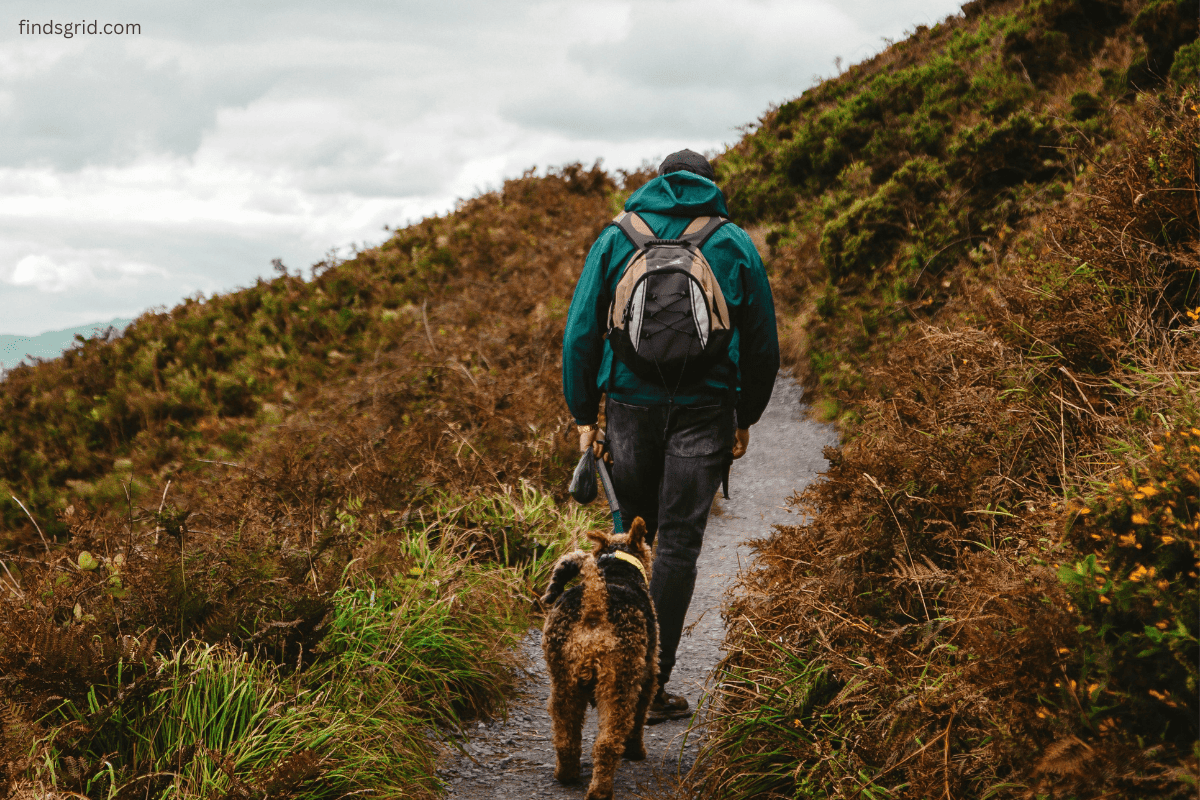
Why Dogs Dry Out Faster Than You’d Guess
Dogs don’t sweat like we do. They cool down by panting, with a little help from their paw pads, and that means a lot of moisture leaves them without any obvious sign. No soaked shirt, no dripping forehead. She just gets a bit slower, and it’s easy to blame the hill.
The usual rule of thumb is about one ounce of water per pound of body weight per day. That’s a baseline for an easy day at home. Add heat, humidity, a steep climb, or a diet of dry kibble, and the number goes up. So counting on whatever’s left at the bottom of your bottle isn’t much of a plan in July.
Here’s the part people skip, though. The way you serve water changes how much she actually drinks. If it’s fiddly, you offer it less. Less offered, less drunk.
The Trouble With Collapsible Bowls
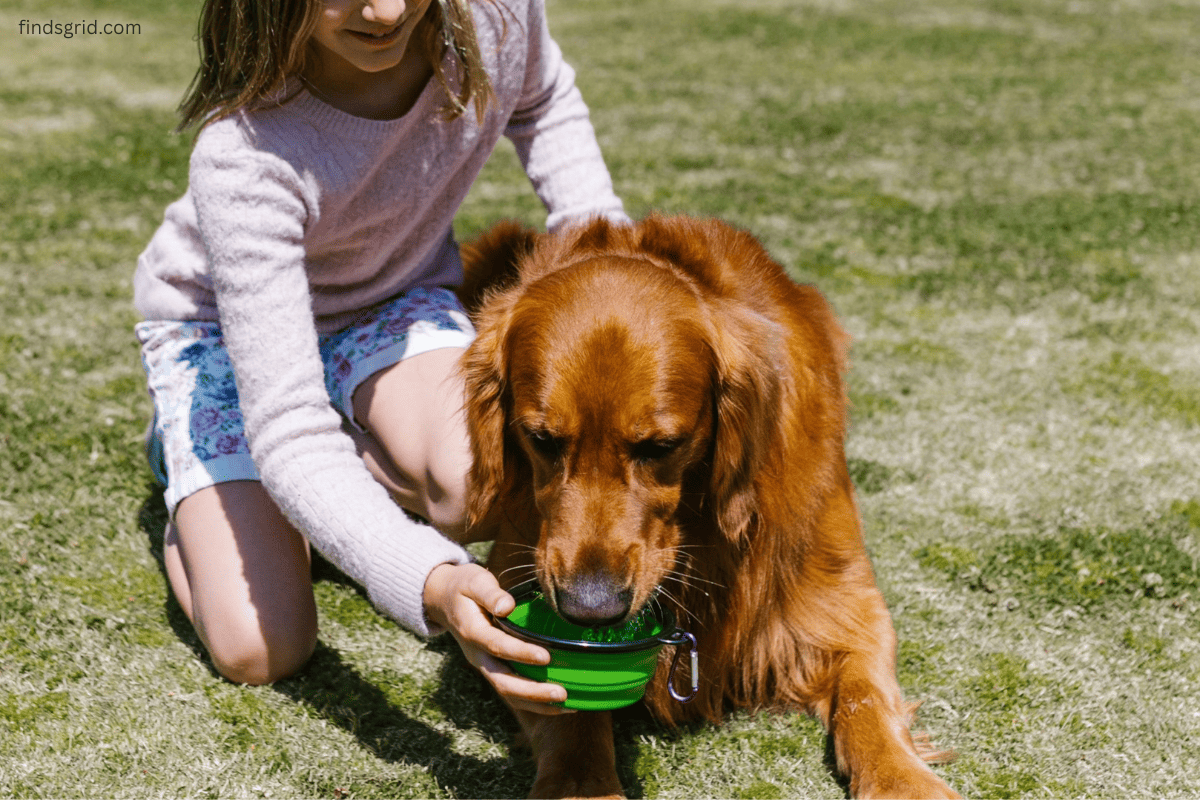
I get the appeal, I really do. They weigh almost nothing, they clip to a leash, and for a lap around the neighborhood they’re fine. I still own two.
Out on real ground, they’re a pain. The walls are soft and there’s no base, so on a slope or a pile of loose gravel one nudge from an eager dog sends the whole thing sliding, water and all. Then there’s what’s left over. She drinks a little, loses interest, and you’re standing there holding a bowl of water with nowhere to put it. Most people dump it. That always feels wrong when you’re miles from a refill.
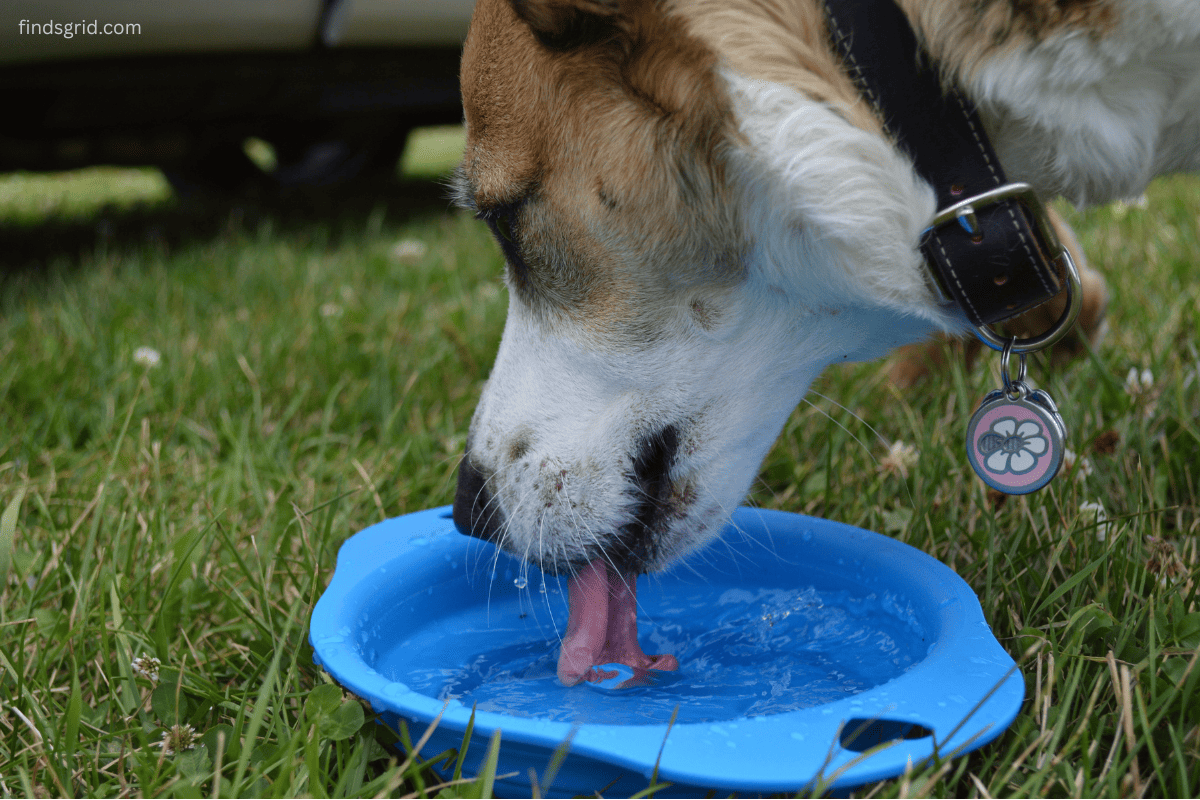
Then the bag. A damp silicone bowl pressed against your jacket leaves moisture behind, plus a faint wet-dog-dish smell that hangs around for days.
And it’s only a bowl. You still need something to fill it, and something for food. Three items to remember at the trailhead, and one of them always ends up on the kitchen counter.
Regular Water Bottles Aren’t the Answer Either
A standard bottle keeps water in one place, and you can buy one anywhere. It just wasn’t built with a dog in mind. No bowl means pouring into your palm or a bottle cap, which is a little ridiculous with a big dog. And plenty of ordinary caps aren’t truly leak-proof after a few hours bouncing around in a pack.
What a 2-in-1 Bottle Changes
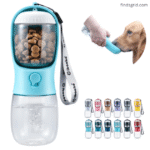
The idea is simple. The water reservoir and the drinking bowl are one unit, and on many models a small compartment on the side holds kibble or treats. That’s a 2 in 1 dog water and food bottle in a nutshell.
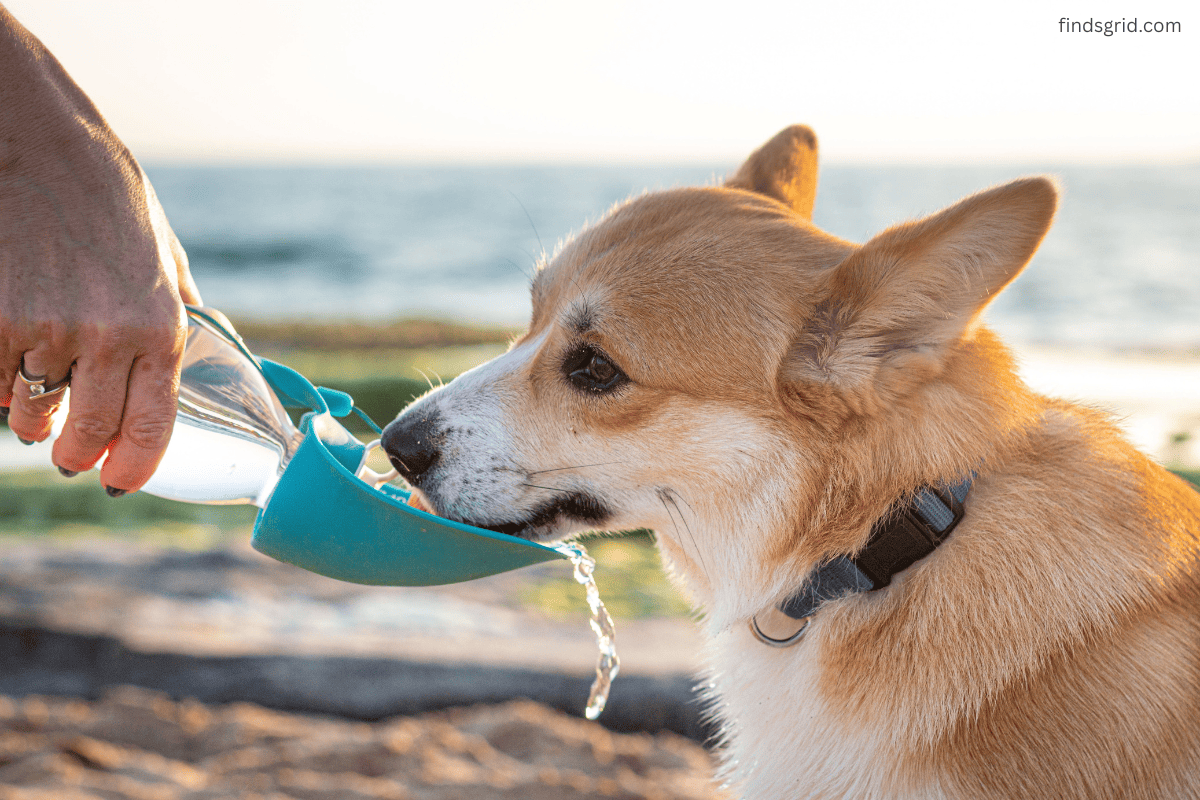
Day to day, it’s the small stuff that matters. You turn a lock, press a button, and water flows into the bowl. One hand. When your other hand has a leash with an excited animal on the end, that beats any spec sheet. Better designs also let leftover water run back into the bottle, so none of it hits the dirt. And if you’ve been looking for a portable dog water bottle with treat dispenser, that side compartment is what replaces the sad ziplock. It won’t feed a big dog for the day. It’s there for rewards and snack breaks, and it does that well.
Leaks deserve their own paragraph. A properly made leak proof dog travel water bottle uses a silicone seal and a lock that stays shut until you decide otherwise. Fair warning: the most common reason these leak is that people forget to turn the lock after using it. Guilty. A lanyard or wrist strap helps too, since it frees your hands and lets you clip the thing to a pack.
It isn’t perfect. It’s bulkier than a flat bowl, and there are more parts to rinse when you get home.
Side-by-Side Comparison
| Feature | Collapsible Silicone Bowl | Standard Water Bottle | 2-in-1 Travel Dog Bottle | Winner |
|---|---|---|---|---|
| Weight and packability | Very light, folds flat | Moderate | Slightly bulkier | Collapsible Bowl |
| Leak prevention | Not applicable, leaves a wet bowl | Depends on the cap | Lock and silicone seal | 2-in-1 Bottle |
| One-handed use | Needs two hands | Needs a separate bowl | One-handed release | 2-in-1 Bottle |
| Water waste | High if leftovers are dumped | Low, but needs a bowl | Low with back-flow | 2-in-1 Bottle |
| Stability on uneven ground | Tips easily | Not applicable | Attached bowl is steadier | 2-in-1 Bottle |
| Food or treat storage | None | None | Built-in compartment | 2-in-1 Bottle |
| Ease of cleaning | Simple, but gets dirty fast | Simple | More parts to clean | Collapsible Bowl |
Matching the Gear to Your Walk
Be honest about how you actually walk. Short loops in mild weather? A collapsible bowl and a small bottle are plenty. Nobody needs a fancy kit to circle the block.
Day hikes and hot summer trips are a different story. You stop more, offer water more, and somewhere around the halfway mark a snack usually becomes necessary. That’s where the 2-in-1 earns its spot. If you’re hunting for the best dog water bottle for hiking, I’d look at three things: a lock you trust, a strap that’s comfortable on your wrist, and a capacity that fits your dog. Small dogs and puppies do fine with the smaller size. Big, active dogs go through water fast, so pick the larger reservoir, and on long routes bring a spare.
I still toss a collapsible bowl in the pack anyway. It weighs nothing, and it’s handy when you bump into a friend’s dog.
Keeping Your Dog Safe When It’s Hot
The single best habit for how to hydrate dog on walks is offering water before she asks for it. In warm weather I aim for every 15 to 20 minutes while we’re moving, and any time she’s panting hard.
Learn what dehydration looks like. Dry, tacky gums are an early sign. Thick, stringy saliva, sunken-looking eyes, a dog who’s suddenly way more tired than usual. You can also gently lift the skin over her shoulders. If it doesn’t snap back quickly, that’s a red flag. Heavy panting that won’t settle after a rest in the shade is another one to take seriously.
If any of that shows up with stumbling, vomiting, or collapse, treat it as an emergency. Get her into shade, offer small amounts of cool water, and call your vet right away. Heatstroke in dogs moves fast.
A few smaller things help. Cool or room-temperature water is best. Huge amounts of very cold water right after hard exercise can upset some stomachs, and water that’s been baking in a hot car isn’t great either. Let her drink in short rounds, because gulping often ends in vomiting. And skip ponds and puddles. Even clear-looking water can carry giardia or leptospira, so bring your own.
What to Check Before You Buy
If a 2-in-1 sounds right, here’s what I’d check. Does the lock and silicone seal feel solid in your hand? Can leftover water flow back into the bottle? Is it food-grade, BPA-free material, and what does the maker say about heat? Dishwasher safe, or top-rack only? Rinse it after every outing either way. Pick a size that matches your dog, and remember the food compartment is for treats and small snacks, not a full meal.
If you are looking for a reliable leak-proof design that holds both fresh water and snacks in one compact container, check out our full Cibaabo Dog Water Bottle Review to see how it performs on daily walks.
Frequently Asked Questions
On many 2-in-1 designs, yes. The bowl is set up so leftover water flows back into the bottle when you release the lock. Just don’t let water your dog has been drinking from sit around for hours. Refresh it after the walk, especially in summer.
A lot of them use food-grade, BPA-free plastic, and some are dishwasher safe, but it varies. Read the maker’s instructions, use the top rack if that’s what they say, and wash it regularly so slime and bacteria don’t build up.
Depends on her size, age, breed, and the weather. On a mild day, a few sips may do it. When it’s hot, offer water every 15 to 20 minutes, even on a short outing. Small dogs might drink a few ounces, big ones usually want more. Your vet can help you fine-tune it.
Go bigger. Larger dogs and longer trips need a bigger reservoir, and many models come in two sizes. Puppies and small dogs on short walks are fine with the smaller one.
Final Thoughts
The best hydration setup is the one you barely think about. When your dog is thirsty on a hot trail, you shouldn’t be fighting a floppy bowl, drying out a soggy bag, or digging around for treats. Offer water often, watch how she’s acting, and stop for shade before she needs it.
If your current routine feels messy, a 2-in-1 bottle is one of the easiest upgrades there is. Keep a collapsible bowl as a backup if you like, and let the bottle handle the daily work. She gets her water, and you get your hands back.