This post contains affiliate links. We may earn a commission if you purchase through them, at no extra cost to you.
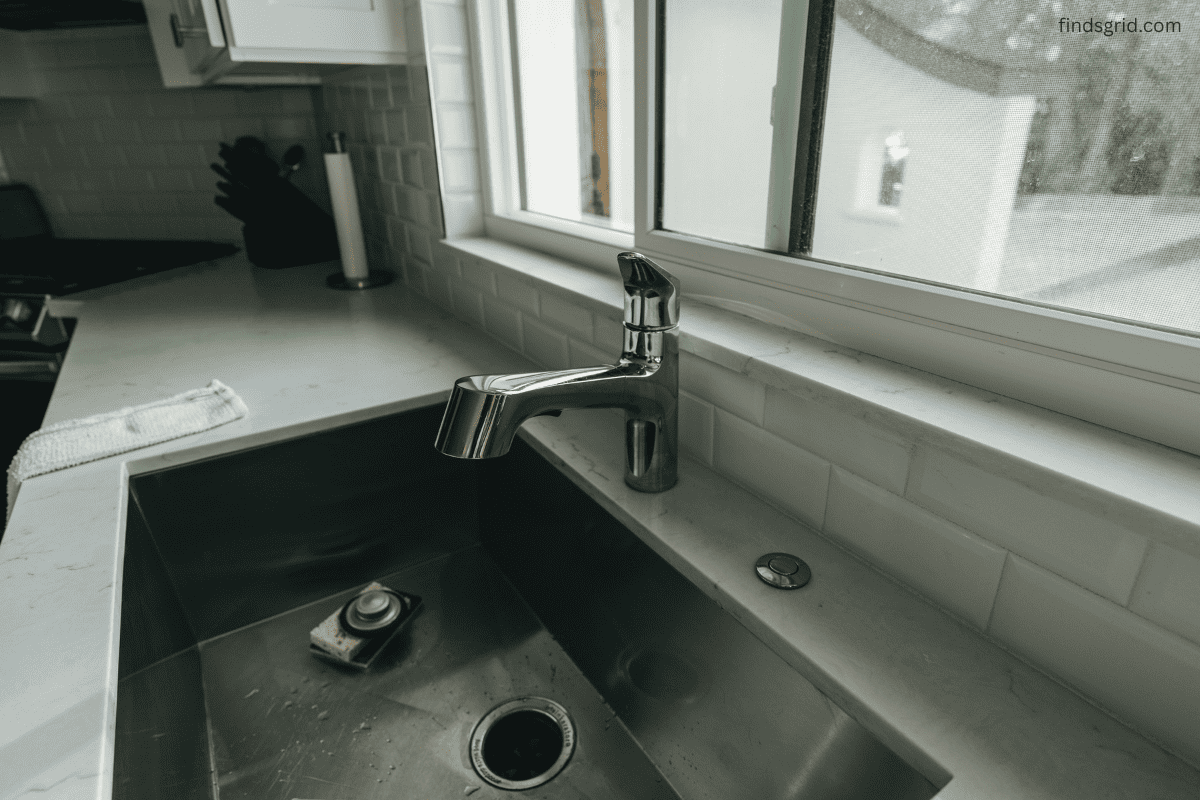
A kitchen sink drain smell is one of those problems everyone ignores until it’s unbearable. I did the same thing for way longer than I should’ve, kept telling myself it was just “old pipes” or whatever. It wasn’t. It was rotting food sitting a few inches under my sink, and once I actually fixed it, I felt kind of dumb for not doing it sooner. If you’re standing over your sink right now watching water pool around your dishes, or catching that sour funk every time you turn the tap on, you’re not imagining it and you’re definitely not alone. Let’s get into why this happens and what actually works.
Quick answer: Kitchen sink clogs and smells almost always trace back to grease and food buildup inside the pipe. A strainer that seals the drain properly, regular hot water flushes, and staying away from harsh chemical cleaners will handle most of it.
What Causes a Kitchen Sink Drain Smell in the First Place
Here’s the part nobody really explains well. Every time you wash a greasy pan, a thin layer of fat sticks to the inside of the pipe. It cools fast. Once it hardens, it starts grabbing onto anything else that goes down there, coffee grounds, grains of rice, bits of onion skin. A few weeks of that and your drain is basically half its original size on the inside.
And whatever slips past a weak strainer? It doesn’t wash away like you’d think. It just sits in the trap. Damp, dark, slowly breaking down. That’s your smell, most of the time. Not “sewer gas,” not some mystery, just old food doing what old food does.
Then there’s the stopper itself. Old rubber ones warp and crack after a while, and once that happens they stop sealing right. Water just dribbles through instead of flushing properly, which honestly gives grease even more time to stick to the walls on its way down. And a bad seal has a second job it stops doing too, keeping smells from drifting back up into your kitchen while you’re standing right there at the sink.
How to Keep Your Kitchen Drain Clean and Odor-Free (Step-by-Step Solution)
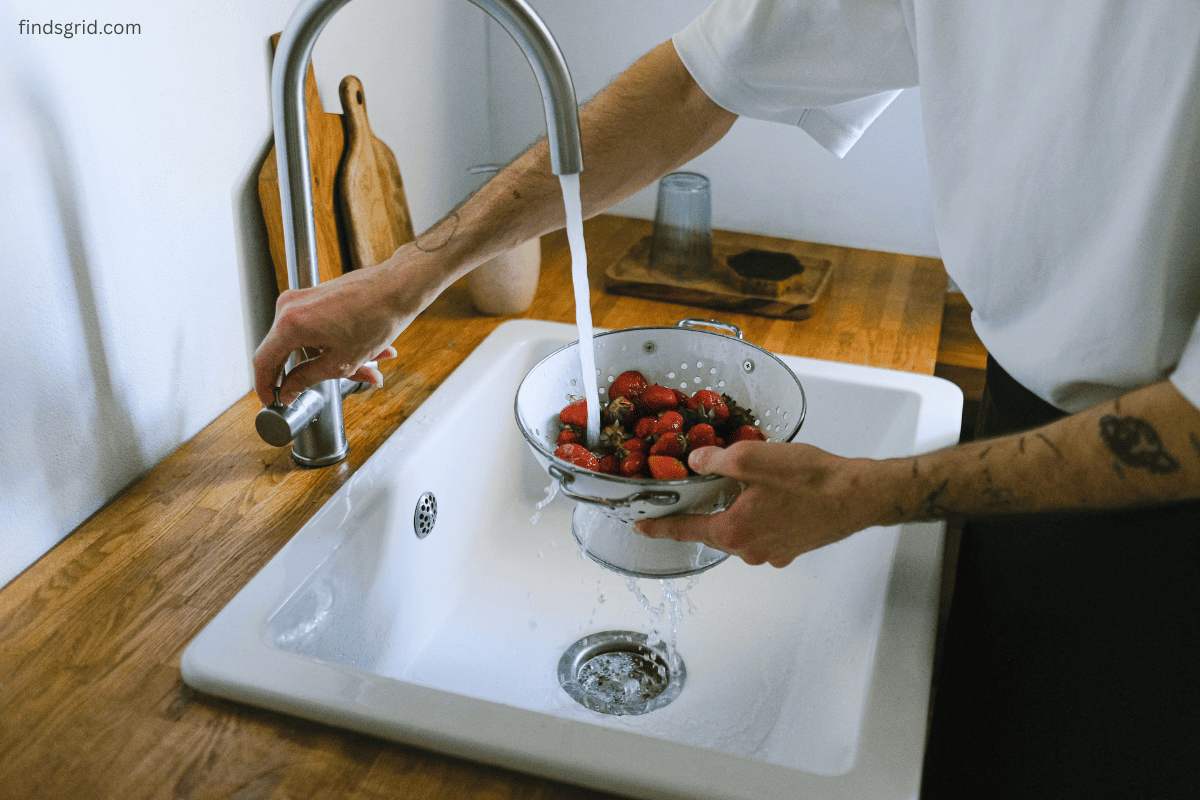
No plumber needed for any of this. Just a few habit changes.
- Scrape plates into the trash before they touch water. Sounds obvious, but most of us skip it half the time. Anything that doesn’t go down the drain literally cannot clog it.
- Catch small debris right at the surface. A strainer with an actual seal stops tiny scraps before they even reach the pipe.
- Run hot water after anything greasy. Hot water keeps fat liquid long enough to actually wash through. Cold water just lets it set right there in your pipe.
- Leave the caustic drain cleaners alone. They might clear things up today, but keep using them and they chew through pipes and rubber seals over time. You’re basically trading a small problem now for a bigger one later.
- Rinse your strainer basket out regularly. A basket that’s already packed with old gunk isn’t catching anything new.
Traditional Strainers vs. Modern 3-in-1 Pop-Up Drain Stoppers
Most of us grew up with the flat mesh basket kind, the ones that just sit loosely over the drain. They catch the big stuff fine. But smaller bits slide right through the gaps, and they’re not doing anything else for you, no water holding, no odor blocking, nothing. It’s a half-fix.
A 3-in-1 pop-up stopper does the job differently. It strains debris, it holds water when you press it down (great for soaking a pot), and it seals the drain so smells can’t sneak back up while you’re washing dishes. Three jobs, one part. That’s a real upgrade from a mesh basket doing one thing and doing it kind of badly.
Practical Tool Recommendation: All-in-One Kitchen Drain Protection
If you’re tired of dealing with slow drains and random bad smells, this is exactly the kind of fix that’s worth it. The Zaa 3-in-1 Sink Strainer is a solid example of what one of these should actually do.
It combines a drain strainer, a water-holding stopper, and an odor-isolation seal into one piece. No swapping parts depending on what you’re doing at the sink. The press-down pop-up uses a brass core, so the bounce mechanism keeps working properly over time instead of turning mushy or sticking after a couple months, which is what happens with a lot of the cheaper plastic ones out there.
The basket’s a food-safe PP filter, made to resist clogging specifically, so rice grains or vegetable bits don’t jam it up the way flimsier baskets do. And the body’s 304 stainless steel, which matters more than people give it credit for. Cheap strainers made from lower-grade metal start rusting and pitting within a year. This one’s built to avoid that entirely.
As far as fit goes, it’s sized for the universal US standard kitchen sink drain, somewhere in the 3 to 3.38-inch range, so it drops straight into a standard 3.5-inch drain without any modification. No tools needed for installation either, and cleaning takes maybe ten seconds, no screws, no brackets, nothing to wrestle with.
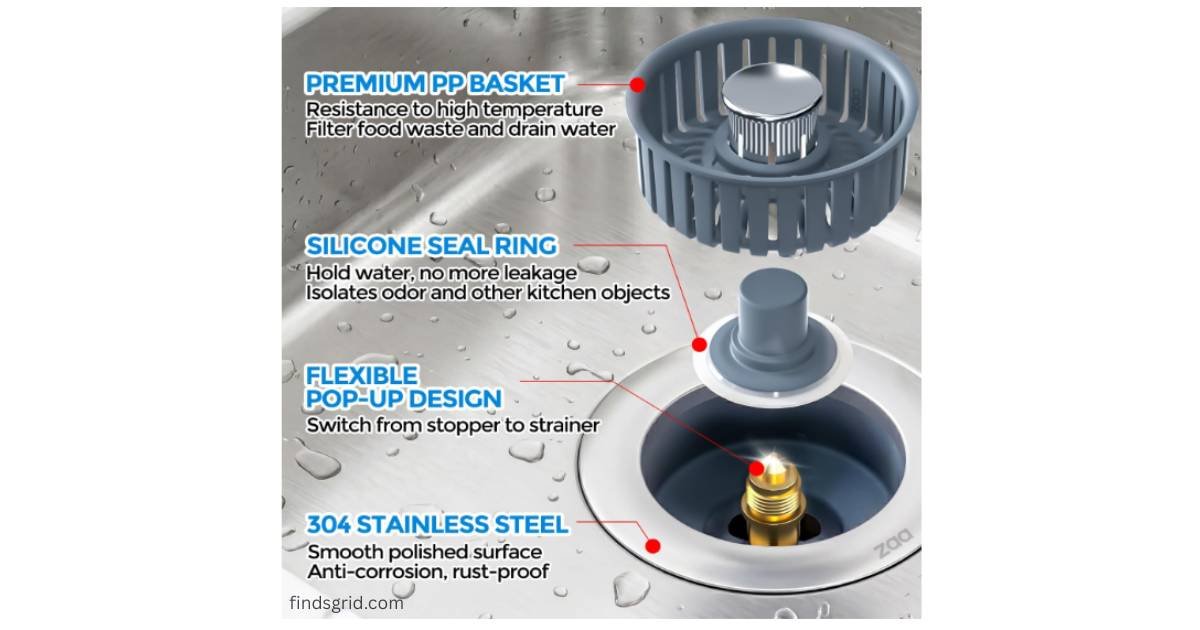
For a complete breakdown of build quality, pop-up performance, and everyday sink usage, check out our full Zaa 3-in-1 Sink Strainer Review.
Common Mistakes That Ruin Your Kitchen Plumbing
A few habits do way more damage than people realize:
- Pouring liquid bacon grease straight down the drain. Looks fine going in, hardens fast the second it hits the cooler pipe.
- Forcing big scraps past the strainer. If it’s not sliding through on its own, it shouldn’t be going down there.
- Reaching for chemical drain cleaner every time things slow down. It wears out your pipes and seals faster than the clogs themselves ever would.
- Ignoring a loose or worn seal. Once that stops sealing right, water backup and smell tend to show up at the same time, not separately.
Frequently Asked Questions
Because running water only hits the surface. It doesn’t touch the grease lining the inside of your pipe or the food sitting further down in the trap. The smell’s coming from below, not anywhere a quick rinse can reach, so it won’t go away on its own.
Yeah, as long as the sizing lines up. Most US kitchen sinks have a drain opening around 3.5 inches, and strainers built for the 3 to 3.38-inch range are made specifically to fit that, no extra hardware required.
Lift it out, give it a shake or a tap over the trash, then rinse under hot water. A quick pass with an old toothbrush or bottle brush knocks loose anything stuck in the mesh. Since it’s food-safe PP, it rinses clean without holding onto grease or old smells.
Final Thoughts
A smelly, slow kitchen drain almost always comes down to the same two things, grease and trapped food. Fix the habit of scraping plates first, rinse with hot water after anything greasy, and use a strainer that actually seals the drain instead of just sitting on top of it. Most of this stuff takes care of itself after that. Want the full breakdown before you buy one? Check out our complete review of the Zaa 3-in-1 Sink Strainer for more on keeping your plumbing in shape for the long run.